Education for peace
Since the war began in March 2015, education in Yemen has been badly affected. In 2015/2016, 1.8 million children were out of school, more than a third of all children of school age.
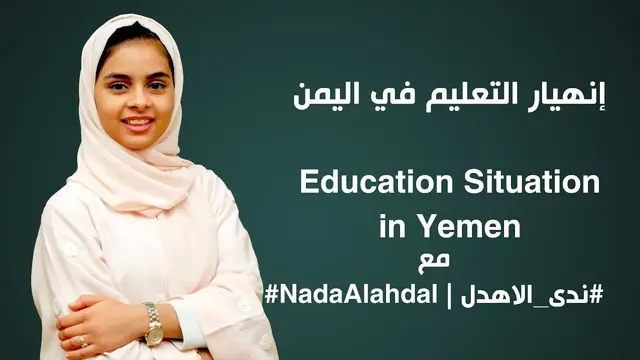 Play video: Education for peace
The video loads from YouTube when you play it.
More than 1,100 schools have closed, either because they were damaged directly or because they now house displaced people. Many girls are likely to be married off at an early age.
Teachers without pay
"About 67 percent of public school teachers, across the country, have not been paid for nearly two years. Many have looked for other work to survive, or teach only a few subjects. So the quality of education is clearly at stake. Children are not getting their full lessons because their teachers are absent. Even where schools are working, the school day and the school year are shorter."
Damaged schools
Yemen lacks places to learn. UNICEF reports that more than 2,500 schools have been damaged or destroyed by the war. Many schools are being used as shelters for displaced people, and some have been taken over by armed groups.
Poverty
But it is the collapse of the economy that is hurting the country's young people most widely. Families have been pushed deeper into poverty, and more than 8 million people are at risk of famine. Parents are increasingly turning to their children to survive.
What is needed
As the conflict goes on, Yemen urgently needs help to design short-term emergency programmes that support education. They should make sure that teachers' salaries and basic running costs continue to be paid. That would give the minimum environment needed for education to continue.
People working in education expect Yemen's main development partners to help with:
- printing school textbooks;
- supplying schools with basic materials;
- repairing partly damaged school buildings so that they can be used again;
- giving technical support to the emergency units in education management, so that they can plan using best practice.