We are all Israa Ghrayeb: a crime against every Arab girl
After the killing of Israa Ghrayeb, a young Palestinian woman, human rights activist Nada Al-Ahdal recorded a live video on her Facebook page. She calls the killing a crime against every Arab girl who wants to live her life as a free human being.
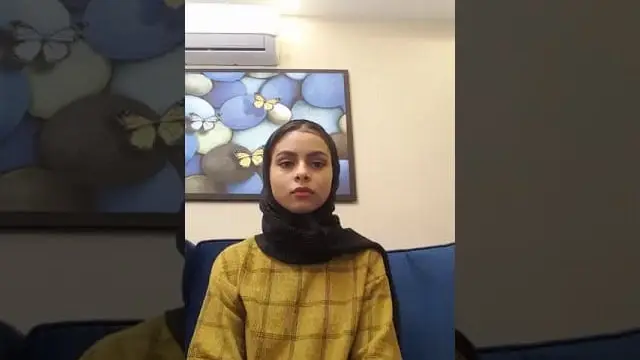 Play video: We are all Israa Ghrayeb: a crime against every Arab girl
The video loads from YouTube when you play it.
In the video, Nada declares her full solidarity with Israa, whom she calls an icon of love, peace and innocence. She ends her angry message with a song by Kadim Al Sahir, sung by the rising singer Hanadi.
Nada says that too often a girl who declares her love, who lives freely and innocently, or who has ambition, talent and human values, is punished with torture and death by her own family, under the banner of "honour" or "shame".
What is honour?
"How many Arab girls have been killed in the name of honour?" Nada asks. "Dozens every day? Thousands every month? Millions whose pure souls have gone to heaven?"
"Did the killer's honour come back after he killed his dear and beautiful sister? Did murder make him a decent man with values and morals? Did this brutal crime make his mother, his father and his family happy?"
In her words, honour lies in tolerance, in greatness of thought, in values and morals, and in protecting your girls and daughters.
Honour is not placed on a girl's body as a symbol of the family's or the tribe's honour. A girl is a human being like you. She loves life, she has feelings, thoughts, a heart, a soul and a mind. She makes change and raises generations. She is the mother, the great sister and the good wife.
"Answer me, please," Nada says. "Are you really honourable when you kill girls, or are you killers without humanity?"
A crime that society shares
A woman's honour belongs to her alone, Nada says. No one has the right to interfere in her decisions, her fate or her conduct. Honour is higher and nobler than a part of her body.
She describes the killing as an ugly crime in an even uglier reality. Israa and many like her, she says, were killed and their cases hushed up because of sick ideas, low awareness, society's complicity with the killers and the absence of the law.
For Nada, Israa is one more victim of extremist ideas such as those of ISIS and other terrorist groups, and of criminal thinking. She is a victim of the ignorance that kills girls every minute. Israa and others tried to live normal lives and were met with violence, then murder.
"In Yemen, a girl like Israa dies every day," Nada says, "but we cannot document these deaths because there is no security."
A message to every family
Solidarity with Israa will not bring her back, Nada says, but it will keep her memory alive as an icon of love, peace and innocence.
She sends a message to every father and every family with a daughter: your daughter is a trust in your care. Protect her and help her achieve her dreams and ambitions as a human being. Do not make her a commodity to be sold, or let her die under torture.
Her brothers were the actual killers, Nada says, but the whole of society killed her. Every father who raised his sons to feel superior to their sisters killed her. Every preacher who said in his sermon that "a woman is shameful" killed her. Everyone who asks "Would you accept this for your sister?" killed her. Everyone who justified or excused her brothers killed her.