Violations against children in Yemen in 2017: the figures
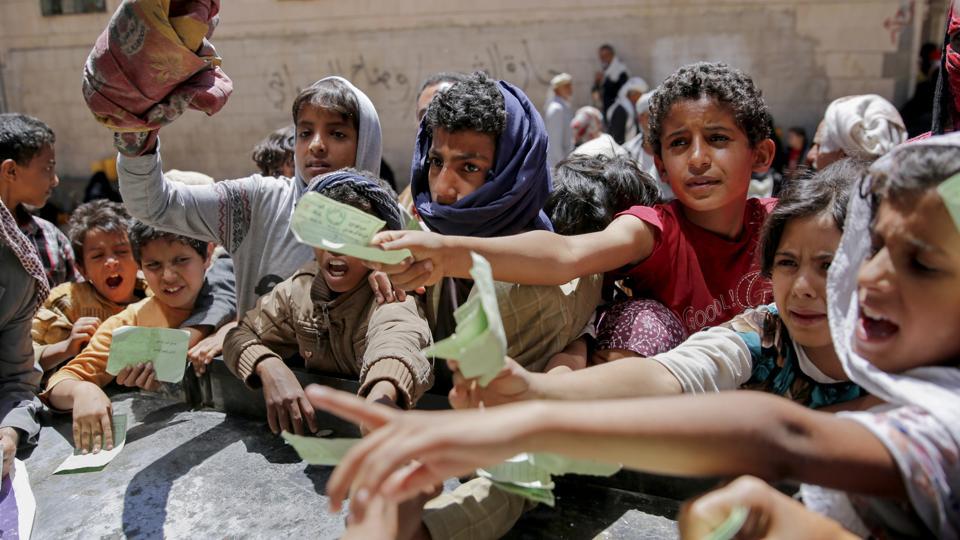
This report sets out the violations that children in Yemen suffered in 2017, as recorded by Nada Foundation. Its title is "Yemen's children under red lines".
Background
The report says the war has destroyed Yemen's future. It points to the civil conflicts, a government that no longer enforces the law or protects human rights, and the disappearance of the official opposition that once watched over political life.
According to the report, armed groups that helped to create this situation have used it to put their own will in place of the law, against anyone who stands in their way. In only two years, it says, Yemen became one of the worst countries for human rights violations, with one thousand one hundred and ninety-six children killed outside the law.
Unlawful killings
1,087 unlawful killings were recorded. 92 of them were in Taiz, which has seen fierce fighting since what the report calls the Houthi coup against the legitimate government.
Physical injuries
1,781 injuries were recorded, 241 of them children in Taiz.
Mines
Mines killed 109 children and injured 160.
Child recruitment
More than 25,000 children have been recruited as fighters. Many of them want to stop, look for a safe place and a return to normal life, but find no way out.
Children who try to escape are threatened with death. The writer gives the example of a nine-year-old cousin who was taken from school. A month later he asked the Houthis to let him go back to his mother. They refused. When he cried out, he was shot in the face, and his body was returned to his mother.
Forced displacement
About 4,300 families have been forced from their homes; 64% of their members are children. They live in the worst conditions, without safety.
Lack of medicine
More than 1,300 children died because they could not get kidney dialysis. The causes were a lack of medicines, power cuts, the absence of medical staff and unpaid salaries.
5,500 children suffer from kidney failure.
More than 2,700 children died of cholera, despite the efforts of the government and relief organisations. The report adds that powerful people misused humanitarian aid for their own interests, without regard for the size of the disaster and its spread.
Nearly half a million children caught cholera.
Family violence
6 children were tortured to death by their parents or relatives. They include a 12-year-old boy and a nine-year-old boy who was killed by a member of his family.
10 children, most of them girls, were left in a critical condition by their guardians.
Child marriage
More than 250 girls were forced into marriage. The reasons were social pressure or hard living conditions. Most of them had fled the war, or were exploited because they had lost their parents and their homes.
4 women took their own lives, one of them in the capital, Sana'a.
12 girls died on their wedding night in Al Hudaydah, Raymah, Taiz and Al Mahwit.
45 girls died in childbirth, and some also lost their babies. These deaths happened in hospitals in Hajjah and Al Hudaydah and in some rural areas.
120 girls were taken to hospital in the first weeks of their marriage.
The fate of 69 girls is unknown. They moved elsewhere to escape the fighting or disappeared from their communities, and contact with them was lost.
Sexual abuse of children
101 children were sexually abused, most of them under 15. Two girls, aged 3 and 5, were killed. Two other children were killed by their own families, out of fear of shame in the community or in a loss of self-control on hearing the news.
Exploitation in dangerous work
32 children were found working in dangerous activities. 8 of them were girls under 14, and 3 of these girls, whose fathers are unknown, were held in forced servitude. Others were used to sell ammunition, to draw children of their own age into smuggling banned goods, or to spy for armed groups.
Internal displacement
Nearly 2 million families have been displaced inside Yemen. More than 55% of their members are children.
The humanitarian situation
The World Food Programme warns that 14 million people across the country, most of them children, do not have enough food and cannot meet even their most basic needs.
Some children and parents have taken their own lives because they could not provide for life's basic needs. An 11-year-old child killed himself because his family could not buy him clothes for Eid. A father took his own life together with 3 of his children because he could not feed them.