Life with the Houthi rebels in Yemen
As Houthi militants took full control of Yemen's capital, Sana'a, journalist Mona El-Naggar travelled there. She covered the unrest and observed how the political crisis affected everyday life in the Arab world's poorest country.
 Play video: Life with the Houthi rebels in Yemen
The video loads from YouTube when you play it.
The video is part of the New York Times series Times Dispatched. What follows is drawn from its transcript.
A capital in crisis
Sana'a is going through a period of sectarian fighting. Suicide bombings recently killed more than a hundred and thirty people. The violence grew when the Houthi rebels, a group most people had never heard of, took control of the city in January.
"What are you doing?" a man asks. "The New York Times," she answers. "Soon you will all be calling it a coup and so on," he says.
El-Naggar admits she does not know exactly what to call it: a coup, an uprising, a revolution? But after the Houthis took over, the president resigned. The country is now leaderless and divided.
Reporting as a woman
El-Naggar arrived in the first days of Houthi control. She wears an abaya to blend in. Still, she is a woman and a journalist working in the field, at a time when very few people know what is really happening there.
She negotiated permission to film, but most of the time she worked as circumstances allowed.
The Houthis
At a rally, the crowd chants the Houthi slogan against America and Israel. El-Naggar says she knows the chant sounds aggressive and the weapons are frightening. But the people she spoke to are less extreme than they appear.
The Houthis, a Shia group, distance themselves from Sunni terrorist groups such as Al-Qaeda and ISIS. They criticise the United States, but they told her their anger is really aimed at the dictators in the region whom America supports.
The Houthis are popular for now, but most of them are young and inexperienced. They are trying to strengthen their power.
Khat
The bulge in one man's cheek is khat, a plant that Yemenis have chewed for thousands of years. It is a mild stimulant, El-Naggar says, rather like drinking two cans of Red Bull. It is everywhere.
Poverty and water
Most Yemenis face more urgent problems than politics. Yemen is the poorest country in the Arab world, and the government cannot meet basic needs. There are shortages of cooking fuel and electricity, and unemployment is high.
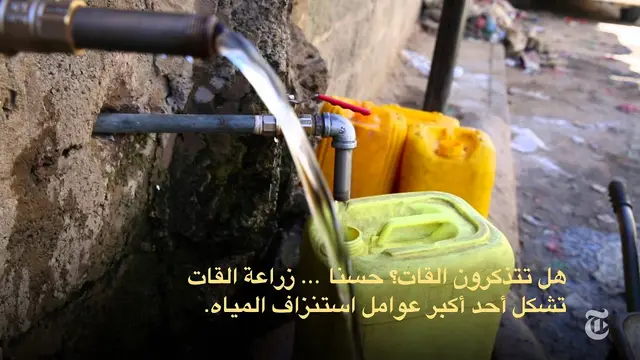
But water worries everyone. Some experts say Yemen will be the first country to run out of water. In some areas, water runs through the mains only once a month, so families store it in plastic containers, which are seen everywhere.
Growing khat is one of the biggest drains on water.
The shortage is so severe that people have given up hope in their government. They have started digging their own wells and selling water from tankers across the city.