Child marriage in Pakistan and the law
Child marriage in Pakistan is prohibited to some extent under the Child Marriage Restraint Act 1929 (No XIX). This video and the text below explain what the law says and where it comes from.
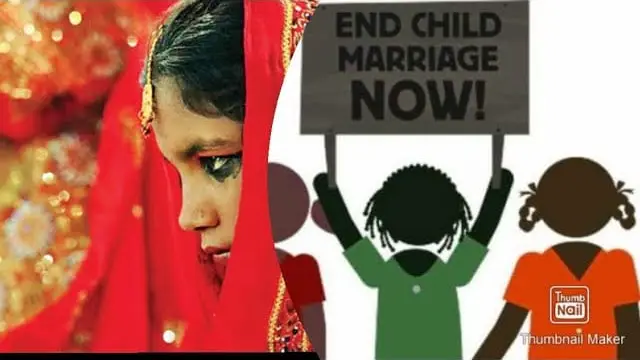 Play video: Child marriage in Pakistan and the law
The video loads from YouTube when you play it.
Minimum ages and punishments
Under the Act, the minimum age of marriage was 18 years for a male and 16 years for a female (section 2). A new bill passed in the Pakistani Senate raised the minimum age of marriage for females to 18.
Breaking the law is punishable with a fine of Rs. 1000, one month's imprisonment, or both. This applies to:
- an adult man (over 18 years of age) who marries a child (section 4);
- a person who performs a child marriage (section 5);
- a parent or guardian who does not act to prevent a child marriage (section 6).
History of the law
The 1929 Act is one of the few laws still on the statute books that were introduced by the founder of Pakistan, Mohammad Ali Jinnah. He introduced it while he was a member of the British India Legislative Assembly.
It was passed on 1 October 1929 to restrain the performing of child marriages, and it applied to the whole of India from 1 April 1930. It is still in force and covers the whole of Pakistan. It applies to all citizens of Pakistan, Muslim and non-Muslim, whether they live in Pakistan or elsewhere.
Before the 1929 Act, the Age of Consent Act of 1892 set the age below which a marriage should not be consummated. Child marriages, however, continued unabated, and the 1929 Act was passed to control them.
As its title shows, the purpose of the Act is to restrain the performing of child marriages. The Act first defined a child as a male under 14 years of age or a female under 12 years of age. These ages were later raised.