Hunger puts Yemen's children at risk
Yemeni families are at the brink and have exhausted their ways of coping with the food crisis. Aid agencies warned that malnutrition rates recorded by the UN in some parts of the country were alarming, with one in three children severely malnourished.
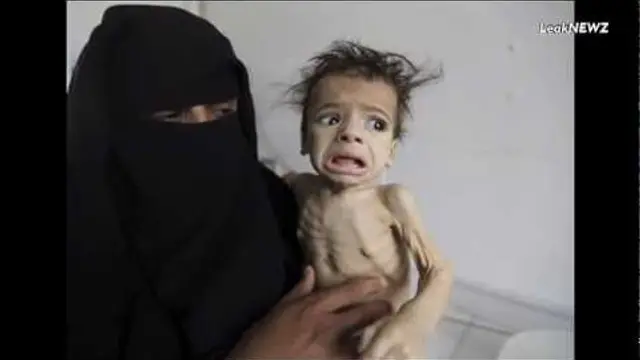 Play video: Hunger puts Yemen's children at risk
The video loads from YouTube when you play it.
A call to donors
Ministers from the UK, Saudi Arabia and other countries were due to meet at the Friends of Yemen conference in Riyadh. Seven agencies – CARE, International Medical Corps, Islamic Relief, Merlin, Mercy Corps, Oxfam and Save the Children – called on those attending to scale up efforts to tackle the crisis.
The UN humanitarian appeal for Yemen was only 43 percent funded, a shortfall of $262 million.
Penny Lawrence, Oxfam's International Director, was visiting Yemen. She said:
"Yemeni families are at the brink and have exhausted their ways of coping with this crisis. A quarter of the population has fallen into debt trying to feed their families. Mothers are taking their children out of school to beg on the streets to get money to survive. Donors are focused on politics and security, but failure to respond adequately to the humanitarian needs now will put more lives at risk, further entrench poverty and could undermine political transition in the country."
Hunger has doubled
Yemen's political crisis of the previous year increased hunger as food and fuel prices surged. Hunger has doubled since 2009. A quarter of the hungry, some 5 million people, need urgent emergency aid.
In Hodeidah and Hajjah, child malnutrition rates are double the emergency level. The UN estimates that 267,000 Yemeni children face life-threatening levels of malnutrition.
Conflict in the north and south of the country is making the crisis worse. In two months, nearly 95,000 people were forced to leave their homes, bringing the number of displaced people in Yemen close to half a million.
Girls and women at particular risk
Women are particularly at risk, as they generally eat last and least. Oxfam's partners have reported an increase in early marriage, as families marry off their daughters young to ease the burden of the crisis.
Jerry Farrell, Save the Children's Country Director in Yemen, said:
"Almost half of Yemen's population now does not have enough to eat. Political instability, conflict and high prices have left families across the country going hungry. We know that children always suffer the most when food is in short supply, and unless urgent humanitarian action is taken, Yemen will be plunged into a hunger crisis of catastrophic proportions."
Aid can reach people
Some donors have explained their slow and limited response by pointing to the security situation and continued political instability. The agencies' work shows, however, that help can be delivered at scale, transparently and accountably, despite the difficult context.
Hashem Awnallah, Country Director of Islamic Relief Yemen, said:
"The hungry of Yemen cannot wait. The aid community is ready and willing to scale up in Yemen. Donors need to heed the lessons of the Horn of Africa and respond now before the crisis further deepens."
There is food in local markets in most parts of Yemen, but millions of people cannot afford enough for their families. The agencies' work includes:
- Oxfam gave cash payments to 100,000 people in Al Hodeidah to help them buy food.
- Save the Children ran a similar programme in Sa'ada.
- Mercy Corps ran cash-for-work projects in Taiz City, paying a fair wage to people with few other ways to earn an income and buy food.
- CARE's recent livelihoods project in Haradh reached 4373 people, including 1794 internally displaced people.
Government programmes such as the Social Welfare Fund, which gives cash payments to millions of Yemenis, could also be supported further and scaled up.