Eliminate child marriage: an animation by UNICEF
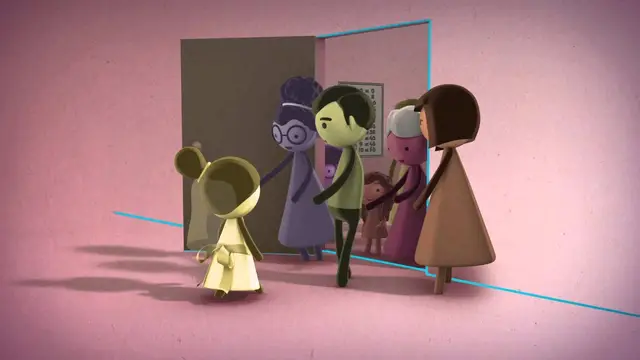
Child marriage is the marriage of a girl or boy before the age of 18. It covers both formal marriages and informal unions in which children live with a partner as if married. This UNICEF animation explains why it must end.
 Play video: Eliminate child marriage: an animation by UNICEF
The video loads from YouTube when you play it.
Where it happens
Child marriage takes place in almost every region of the world. It is most common in South Asia (46%), sub-Saharan Africa (37%), and Latin America and the Caribbean (29%).
Boys are vulnerable too, but the practice affects far more girls. It violates their right to a healthy, productive life and to make their own choices.
How it harms girls
Girls who marry early usually stop going to school and are unlikely to gain skills for work. This limits their future economic opportunities and personal development, and so helps the practice continue.
Child brides are usually much younger and less mature than their adult partners. This puts them at greater risk of violence, abuse and exploitation.
They are less able than older women to negotiate sexual relations or the use of contraception. This leaves them open to unwanted and frequent pregnancies and to sexually transmitted infections.
Early pregnancy also leads to many other health problems, including complications in childbirth and death during delivery. It endangers the health of both young mothers and their babies.
Child mothers usually know less than adult mothers about good ways to feed and care for their children. As a result, more of their children are stunted, wasted or underweight.
What UNICEF does
UNICEF supports governments and civil society to run joint programmes to end child marriage. These build on promising experience and on evidence from the social sciences.
The programmes and policies aim to respect culture. They recognise that in many cultures marriage is seen as a private matter and a cherished tradition.
At the same time, they open discussions across whole communities. These help families and the wider public to see the harm the practice causes and to learn about human rights. As a result, communities have decided together to support girls to delay marriage and to respect their rights.
What it takes to end child marriage
Ending child marriage requires governments to commit to reforms of policy and law, on child marriage itself and on related gender discrimination. Governments also need to support a national dialogue to change the social norms that keep the practice alive.
Stronger social and educational services are vital. They give girls real alternatives to marriage, and they serve girls and women who are already married or pregnant. Adolescents and young people should also take part in discussions on ending the practice.
Credits
Designed and animated by UVPHACTORY (principals Scott Sindorf and Damijan Saccio). Project team: Valentin Boschi, San Charoenchai, Michael Darmanin, Jeremy Greenberg, Ali Jamali, John Lee and Damijan Saccio. Music composed by Bix Sigurdsson.