Children in Yemen face a crisis within a crisis, says UN relief chief
At the High-Level Pledging Event on Yemen in 2019, donors pledged US$2.6 billion so that humanitarian operations in Yemen can continue and grow. For millions of Yemenis, humanitarian aid is now the only lifeline.
 Play video: Children in Yemen face a crisis within a crisis, says UN relief chief
The video loads from YouTube when you play it.
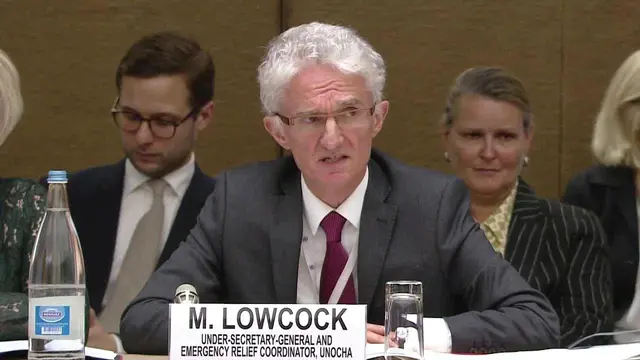
The statement comes from Mark Lowcock, the UN Under-Secretary-General for Humanitarian Affairs and Emergency Relief Coordinator.
More money pledged
The pledges are higher than last year's total of US$2.01 billion, 100 per cent of which was paid. Most donors (16 so far) increased their pledges. Saudi Arabia, the United Arab Emirates, the United Kingdom, the European Union, Germany and Canada made significant increases.
The 2019 Humanitarian Response Plan for Yemen needs $4 billion to reach 21.4 million people who are barely surviving. More than half of the funding will go to emergency food aid for 12 million people, a 50 per cent increase on last year.
Women and children pay the highest price
The conflict is taking an enormous toll on women and children.
"Children did not start the war in Yemen, but they are paying the highest price. Some 360,000 children are suffering from severe acute malnutrition, fighting for their lives every day (…) And as in all humanitarian emergencies, women and girls are suffering a crisis within a crisis. They are at increased risk of sexual and gender-based violence, and of child marriage. More than two-thirds of Yemeni girls are married before they turn 18, up from 50 percent before the conflict started."
Women and girls as part of the solution
"The women and girls of Yemen are among those suffering, they are among the victims of this crisis, but they are also part of the solution," Mark Lowcock said in his opening remarks.
"One of the things we are doing in the Humanitarian Response Plan this year is designing our intervention in such a way that women and girls can play their part as the solution. And I do encourage you, as you are thinking about how to execute your pledges, to think about the ways in which you are going to help us make that possible."
Hope for a better future
Last month, the Emergency Relief Coordinator allocated $32 million from the Central Emergency Response Fund to scale up humanitarian logistics. The new pledges will help humanitarian partners across Yemen reach even more people whose suffering is beyond words.
"I hope that, a year from now, what we will be able to discuss is progress in building a better future for the people of Yemen," Lowcock said. "Whether we can do that depends on what happened today and through the rest of the year, but the people of Yemen deserve a better future."
Source: OCHA, the UN Office for the Coordination of Humanitarian Affairs.