Child marriage, child motherhood
Child marriage is deeply rooted in cultural traditions, which can be hard to change. This video by Video Volunteers, and the text below, explain how early marriage harms girls' health, education and future.
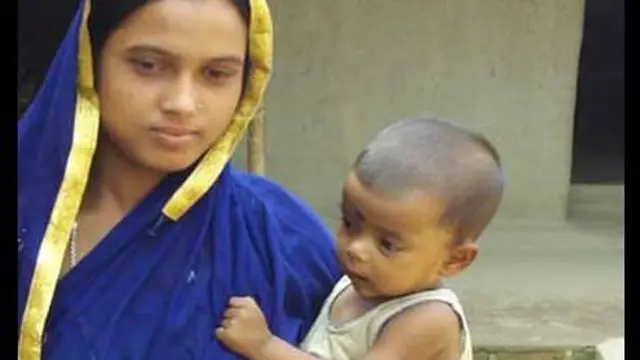 Play video: Child marriage, child motherhood
The video loads from YouTube when you play it.
The harm to girls
Girls who marry as children are often more exposed to the health risks of early sexual activity and childbearing, including HIV and obstetric fistula.
They lack status and power. As a result, they often suffer domestic violence, sexual abuse and social isolation.
Lost education
Early marriage almost always deprives girls of education or meaningful work, and this keeps them in poverty.
It denies children of school age their right to education. They need this education for their personal development, for adult life, and to contribute to the future wellbeing of their families and society. Married girls who want to stay in school may be shut out both in practice and by law.
Poverty
Poverty is one of the main causes of early marriage. Where poverty is severe, a young girl may be seen as an economic burden, and she may be married to a much older, sometimes even elderly, man.
Reproductive health and rights
Good reproductive health covers every aspect of reproduction: the ability to have children, and the freedom to decide whether and when to have a child. Early marriage can violate both the right not to have sexual relations and the right to control one's own reproduction.
Teenage girls are also more vulnerable than adult women to sexually transmitted infections (STIs), including HIV. This is due to biological factors and to social ones, such as unequal power between women and men, which makes it hard for girls and young women to insist on safe sex.
STIs can lead to infertility. HIV can lead to early death and can be passed on to the unborn child.
Pregnancy and childbirth
The risks of early pregnancy and childbirth are well documented. They include a higher risk of death, premature labour, complications during delivery, low birth weight, and a greater chance that the newborn will not survive.
Pregnancy-related deaths are the leading cause of death worldwide for girls aged 15–19, married or not. Mothers in this age group are 20 to 200 per cent more likely to die in pregnancy than women aged 20 to 24. Girls under 15 are five times as likely to die as women in their twenties.
The cost to society
Early marriage also has social, economic and environmental costs for countries that lack the resources to ensure a good quality of life for their fast-growing populations. In this sense, it has deep social and economic consequences for society as a whole.
These consequences are made worse because the children of young mothers with no schooling tend to face the same cycle of deprivation and harm that their mothers faced.
Editor's note in the original: the text above was taken from UNICEF sources.